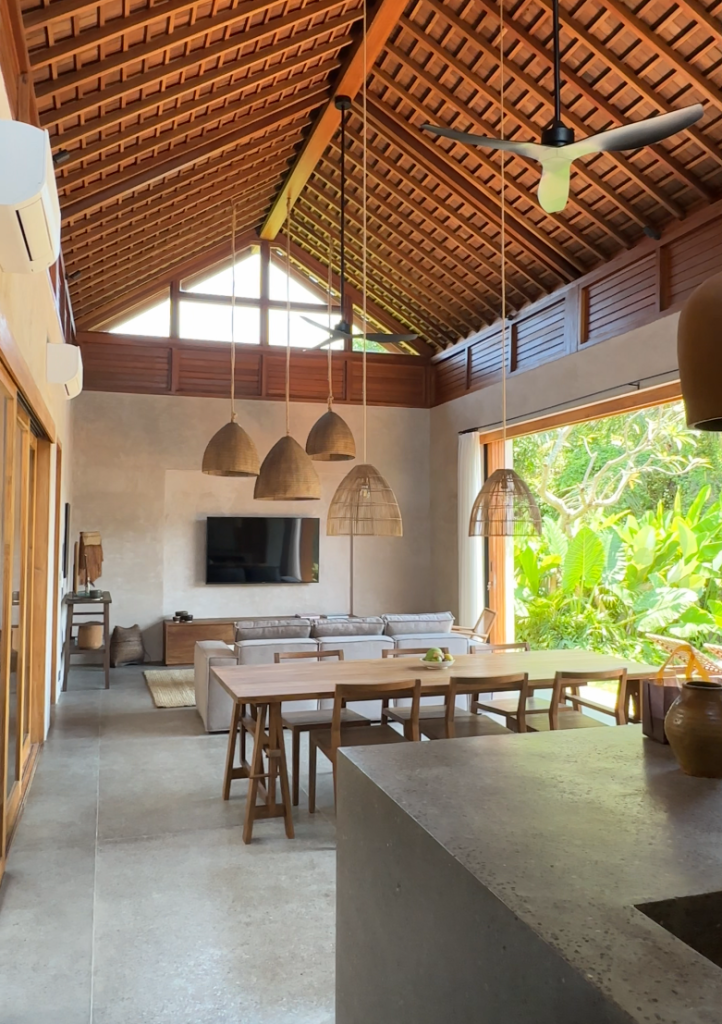
Building a home is one of the most significant decisions a person can make , and when that home happens to be a villa in Bali, the stakes, the excitement, and the creative possibilities all multiply tenfold. Whether you’re planning a private retreat, a family holiday home, or a luxury rental property, understanding the construction and design process from the ground up is essential to getting it right.
This guide walks you through everything you need to know about designing and building a Bali villa , from structural planning and material selection to interior finishing and outdoor living spaces.
Why Bali Villas Demand a Different Approach to Home Improvement
Most home improvement guides are written with Western climates in mind , insulation for cold winters, HVAC systems, weatherproofing against snow and rain. Building in Bali flips all of these assumptions on their head.
Bali’s tropical climate means your greatest challenges are heat management, humidity, cross-ventilation, and heavy seasonal rainfall. A well-designed Bali villa works with the climate rather than against it. Open-plan pavilion structures, elevated rooflines, and strategic orientation toward prevailing breezes are not just aesthetic choices , they are functional, climate-responsive design solutions that have been refined over centuries of Balinese architecture.
This is why bringing in a specialist matters enormously. An experienced bali villa construction company understands both the technical requirements of tropical construction and the cultural design language that makes Bali villas so uniquely desirable.
Phase 1: Site Planning and Architectural Design
Before a single shovel breaks ground, exceptional villa construction begins with thorough site analysis and architectural planning.
Orientation and Sun Path In Bali, the sun rises strongly from the east and the prevailing winds typically come from the south and southeast. A skilled architect will orient your villa to maximize natural ventilation, minimize heat gain on the western facade (where afternoon sun is harshest), and position key living areas to enjoy the best light throughout the day.
Topography and Drainage Bali’s terrain ranges from flat coastal plains to dramatically sloping hillsides. Proper drainage planning is non-negotiable , the island receives heavy rainfall during the wet season (November to March), and poor drainage can cause serious structural damage, soil erosion, and flooding. Retaining walls, French drains, and swales are often incorporated into the early site plan.
Zoning and Permits Bali’s land use is governed by local zoning regulations. Agricultural green zones (zona hijau) carry significant building restrictions, while designated residential and commercial zones allow more flexibility. Your building permit (now called PBG under the latest Indonesian regulations) must be obtained before construction begins , a process that requires accurate architectural drawings and land certificates.
Phase 2: Structural Systems and Foundation Work
The foundation of your villa must account for Bali’s soil conditions and seismic activity. Indonesia sits within the Pacific Ring of Fire, meaning earthquake-resistant construction is not optional , it’s a legal and practical necessity.
Foundation Types For most Bali villas, reinforced concrete pad foundations or strip foundations are used, with the depth and specification determined by soil bearing capacity tests. On sloping sites, pile foundations may be required for stability.
Structural Frame The structural frame of a Bali villa is almost universally reinforced concrete (RC frame), which provides the strength needed to withstand both seismic forces and the weight of traditional heavy clay roof tiles (genteng tanah liat) that are standard in Balinese architecture.
Roof Construction The roof is one of the most visually defining elements of a Bali villa. Traditional pitched roofs with wide overhanging eaves serve a dual function: they protect walls from heavy rain and create shaded verandas that reduce solar heat gain. Roof structures are commonly timber framed (using local bengkirai or merbau hardwood) with clay tile or alang-alang thatch finishing for the most authentic Balinese character.
Phase 3: Materials , The Bali Palette
Material selection in Bali is one of the most enjoyable parts of the design process. The island has a rich tradition of artisan craftsmanship and an abundance of beautiful natural materials.
Volcanic Stone (Paras and Batu Hitam) Paras is a soft, creamy volcanic sandstone used for carving intricate decorative panels, wall cladding, and garden sculptures. Batu hitam (black volcanic stone) is used for flooring, feature walls, and outdoor paving. Both are quarried locally and are central to the Balinese aesthetic.
Reclaimed Teak Aged teak timber salvaged from old Javanese joglo houses is one of Bali’s most prized building materials. Used for feature walls, flooring, ceiling beams, doors, and furniture, reclaimed teak brings warmth, texture, and sustainability to any interior.
Terrazzo and Polished Concrete These materials are workhorses of the Bali villa interior , durable, cool underfoot, easy to maintain, and visually striking. Custom terrazzo can incorporate local stone chips, glass, or even crushed coconut shell for a truly unique floor finish.
Bamboo For eco-conscious builds and contemporary tropical architecture, engineered bamboo is gaining traction as a structural and decorative material. Properly treated bamboo is durable, sustainable, and offers a distinctive aesthetic that is increasingly sought after in luxury eco-villas.
Phase 4: The Outdoor Living Spaces
In Bali, the outdoor spaces are not secondary to the interior , they are often the primary living areas. The quality of your pool, garden, and outdoor entertainment zone will define the villa’s character and, if it’s a rental property, directly impact your booking rates.
The Pool, Almost every Bali villa worth its name has a private pool. Infinity pools , where the water appears to merge with the landscape beyond , are the gold standard for villas with views. Pool sizing, tiling, filtration systems, and safety features all require careful specification. A 10m x 4m pool is a common baseline for a 3-bedroom luxury villa.
Tropical Landscaping, Bali’s climate supports extraordinary plant diversity. A well-designed villa garden will layer canopy trees (frangipanis, traveller palms, bamboo clusters) with mid-level shrubs and ground cover to create a lush, immersive environment. Lighting design in the garden , uplighting trees, pool illumination, pathway lights , transforms the outdoor space dramatically after dark.
Bale and Sala, The traditional Balinese bale (open-sided pavilion) is one of the most beloved features of villa design , a shaded, breezy outdoor lounging area that serves as the villa’s social heart. Modern villa designs often incorporate a sala beside the pool as a day bed pavilion, creating that quintessential Balinese resort experience.
Phase 5: Interior Finishing and Smart Home Integration
The finishing phase is where a villa goes from a construction site to a living space , and it’s where attention to detail makes the biggest difference.
Joinery and Custom Furniture, Bali has an exceptional pool of skilled furniture makers and craftsmen. Custom joinery , kitchen cabinets, wardrobes, bathroom vanities, bed frames , can be produced locally to a high standard and at a fraction of the cost of equivalent work in Western markets. This is one of the genuine advantages of choosing to build villa in Bali versus elsewhere in the region.
Bathroom Design, Bali villa bathrooms are a design category of their own. Semi-outdoor showers with garden views, freestanding stone baths, dual vanities with teak cabinetry, and rainfall showerheads are standard expectations in the luxury segment. Getting the waterproofing right (especially in semi-outdoor bathrooms) is critical , this is an area where experienced contractors make a significant difference.
Smart Home Systems, Modern Bali villas increasingly incorporate smart home technology: automated lighting scenes, app-controlled air conditioning, security cameras, smart locks for keyless entry (essential for short-term rental operations), and whole-home audio systems. Planning for these systems at the design stage , running conduit before walls are plastered , saves considerable cost and disruption later.
Common Home Improvement Mistakes to Avoid in Bali
Even experienced builders make avoidable errors when working in Bali for the first time. Here are the most common pitfalls:
Underestimating waterproofing requirements. Bali’s heavy rainfall demands premium waterproofing on all flat roofs, wet areas, and below-grade walls. Cutting corners here leads to water ingress that is expensive and disruptive to fix.
Skipping soil testing. Not all Bali land is the same. Soft or expansive soils require deeper foundations or ground improvement works that must be factored into the budget from the start.
Ignoring natural ventilation. Over-reliance on air conditioning in a poorly ventilated villa leads to high operating costs and a less pleasant living experience. Good tropical design minimizes the need for mechanical cooling.
Choosing materials based on appearance alone. Some beautiful materials perform poorly in Bali’s humidity. Certain timbers will warp, some stones will stain, and some finishes will deteriorate rapidly in tropical conditions. Always verify material suitability with your contractor.
Final Thoughts
Building a villa in Bali is genuinely one of the most rewarding home improvement projects imaginable , combining world-class design possibilities, skilled local craftsmanship, and a destination that millions of people dream of calling home, even temporarily. The process requires careful planning, the right professional partners, and a realistic understanding of the local construction landscape.
Approach it thoughtfully, surround yourself with experienced people, and the result will be something far beyond a home improvement project , it will be a masterpiece of tropical living.